You might be an engineer – if, you fix broken fitness equipment with CAD and 3D printing. This 3D printing repair case shows just how that was done. It starts with a budget water rower exercise machine that had arm failures in the resistance paddle which spins inside the water tank. Unfortunately, the machine had been purchased early in the year and the paddle arms failed by December.
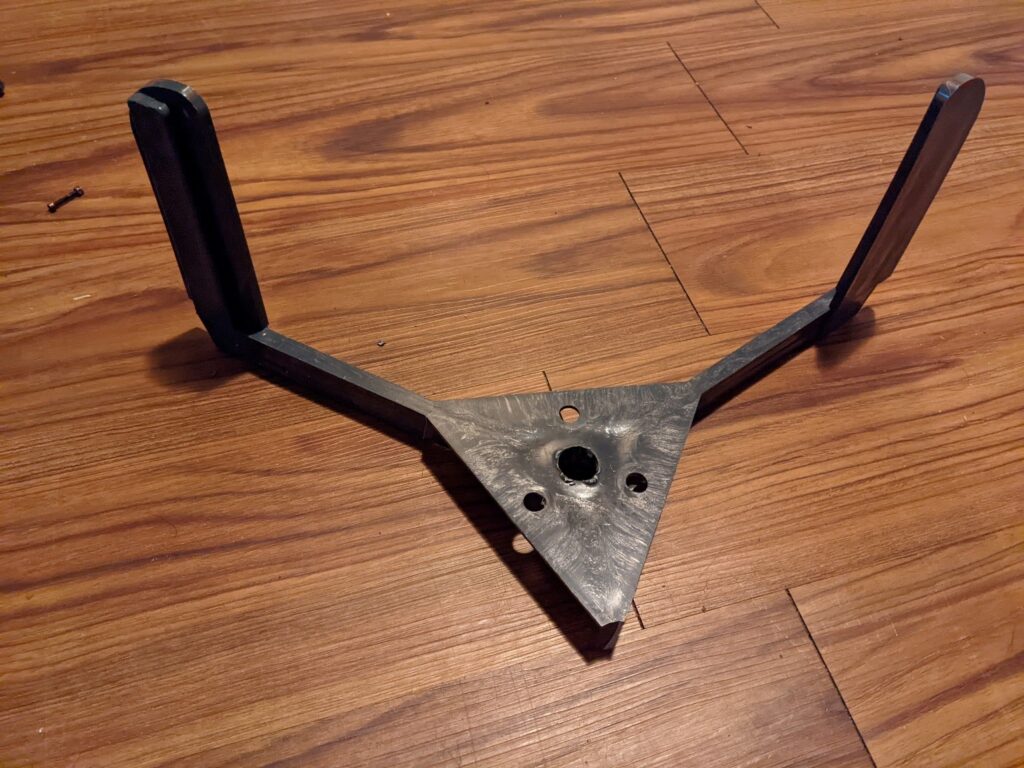
Why the Original Water Rower Paddle Failed
Upon closer inspection, the arms of the original paddle broke off where the plastic transitions from a thinner beam profile to the larger hub. In hindsight, it could have been predicted by using SOLIDWORKS Flow, Plastics, or Simulation software. However, that discussion will be saved for another article.
This type of failure makes the component an excellent candidate for 3D printing repair. Rather than simply reproducing the original part, engineers can redesign the weak geometry to create a stronger, more durable replacement.
Redesigning the Paddle for Improved Performance
For the moment, we will focus on designing and producing a 3D printed replacement paddle. The new design is inspired by the paddle used in commercial-grade water rowers found in health clubs.
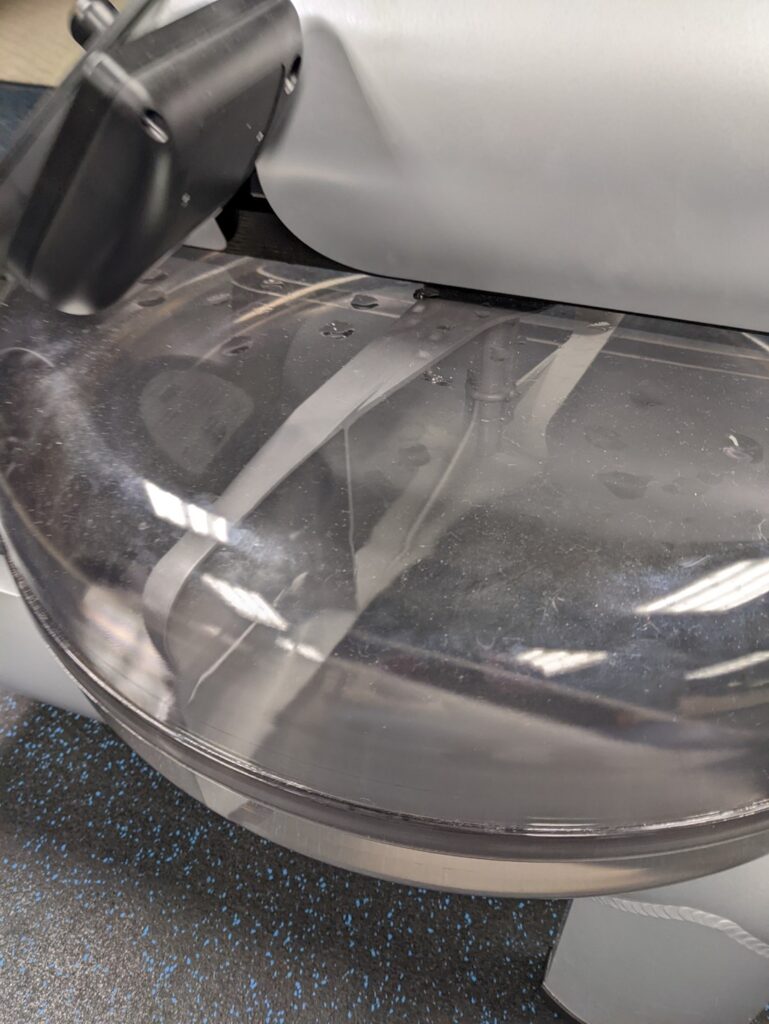
To improve the design, the commercial grade water rower has single mixing paddle design that extends across the diameter of the tank. In addition, there are openings between the shaft hub and the scoop ends, but the paddle has solid plastic arms at the top and bottom of the water tank. The budget rower was connected only at the bottom of the water tank leading to increasing offset dynamic loads as athlete exertion increases.
Optimizing the Design for 3D Printing
Although the original design paddle diameter of 18 inches is larger than many 3D printer print volume dimensions, it was possible to get 16 inches diagonally across the build plate. To compensate for the reduced print size, the width of the working portion of the paddle was adjusted, and the solid section was moved to the top. As a result, the 3D printed design maintained a water-displacing surface area similar to that of the original injection-molded paddle.
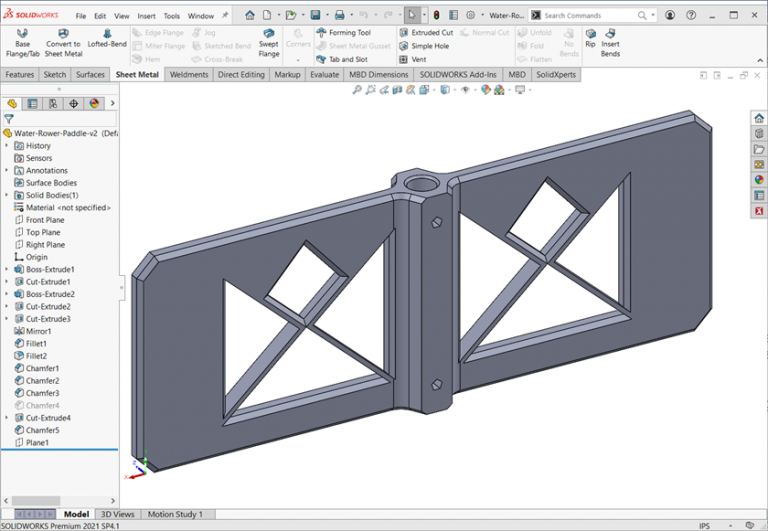
Furthermore, by using a pattern of triangle and diamond shapes for the open section, the replacement paddle can be printed without support. Chamfers are used for edge breaks around the edges and openings for better flow characteristics while still being easy to print.
Finally, the original paddle had a pressed and brazed connection between the paddle and rower shaft. This was replaced with a pentagon shaped hole to allow for screw fastening to the shaft.
Choosing the Right Material for 3D Printing Repair
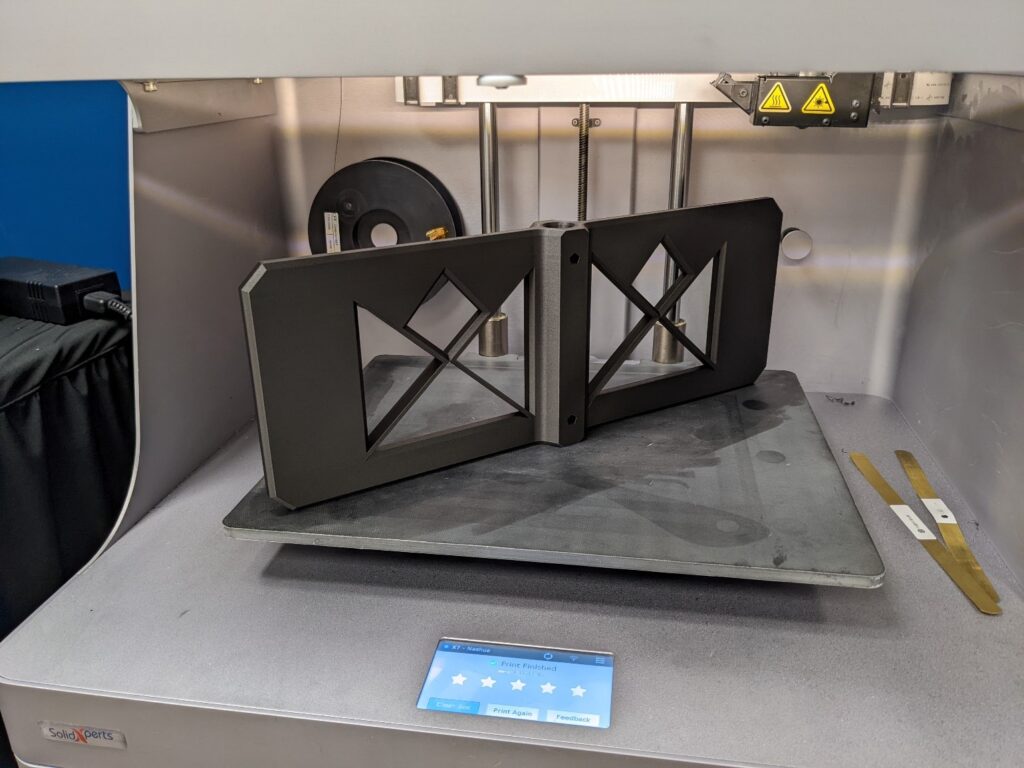
To maximize durability, Markforged Onyx filament is used which is a carbon and nylon blend. The wall passes are increased and gyroid infill is used along with maintaining the full paddle width through the paddle cross section.
Installing the 3D Printed Replacement Part
Disassembling the original paddle from the rower required several steps. The process involved drilling and using a gear puller to free the shaft before the 3D printed replacement could be installed.
Once the original component was removed, some additional drilling and bolting allowed the new paddle to be installed on the rower shaft.
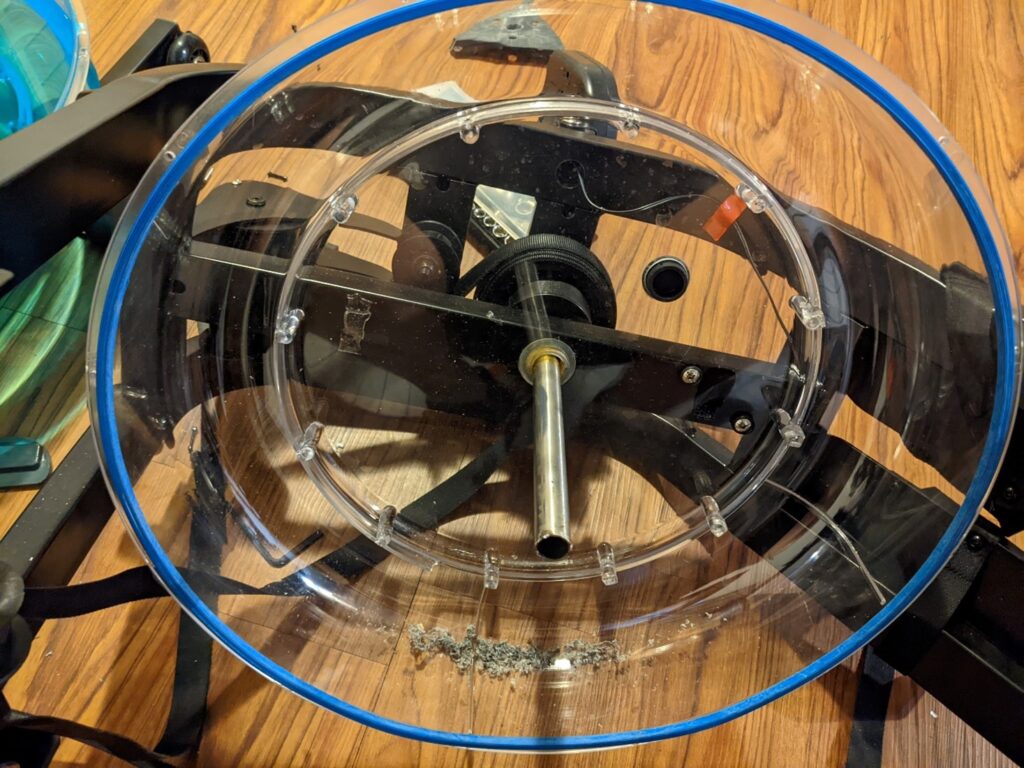
Performance After the 3D Printing Repair
With a slight adjustment of water volume in the tank, the 3D printed replacement paddle provides the same resistance and workout as the when the machine was new.
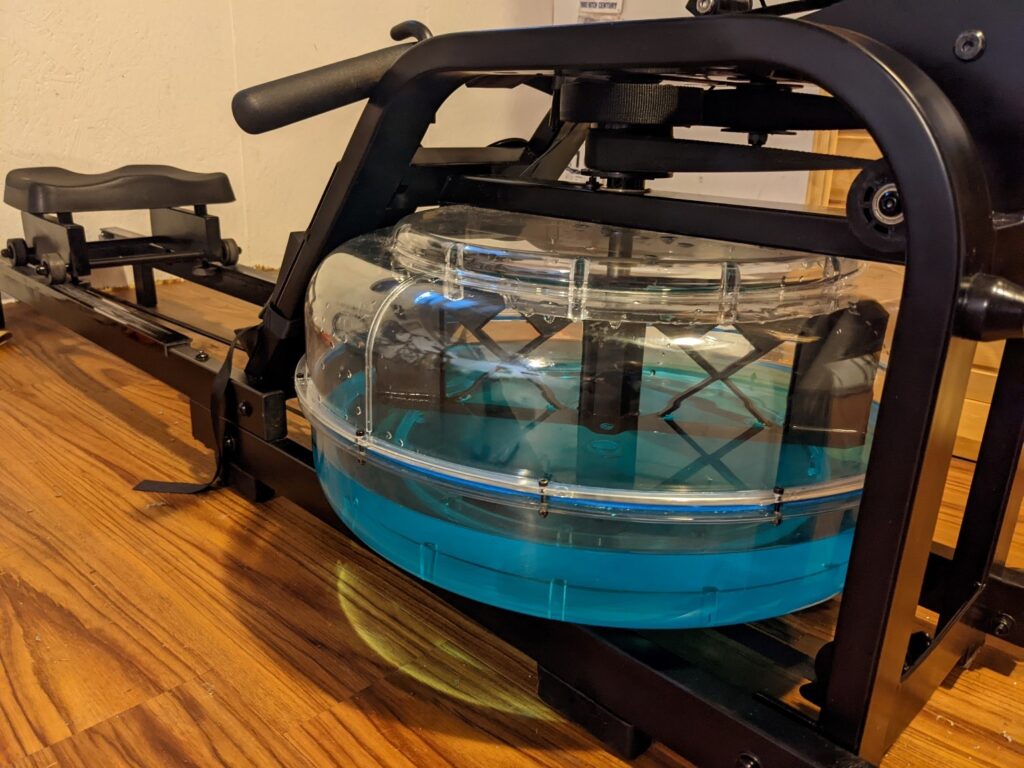
Although the water flow is different with the replacement paddle but the workout is the same. As a result, the repair is done in time for a new year of health resolutions.
The Value of 3D Printing Repair
This project demonstrates how 3D printing repair can extend the life of consumer equipment while improving the original design. Rather than replacing the entire machine, a redesigned component restored performance, reduced waste, and created a more durable solution.
Whether you’re repairing obsolete, damaged, or discontinued components, contact Solidxperts to explore how SOLIDWORKS and industrial 3D printing can provide a practical, cost-effective solution.